Molecular Discovery & Screening Core

Accelerating Discovery Through Precision Science
(Formerly Drug Discovery Core)
For HTS, CRISPR, cell engineering, viral production and translational research.
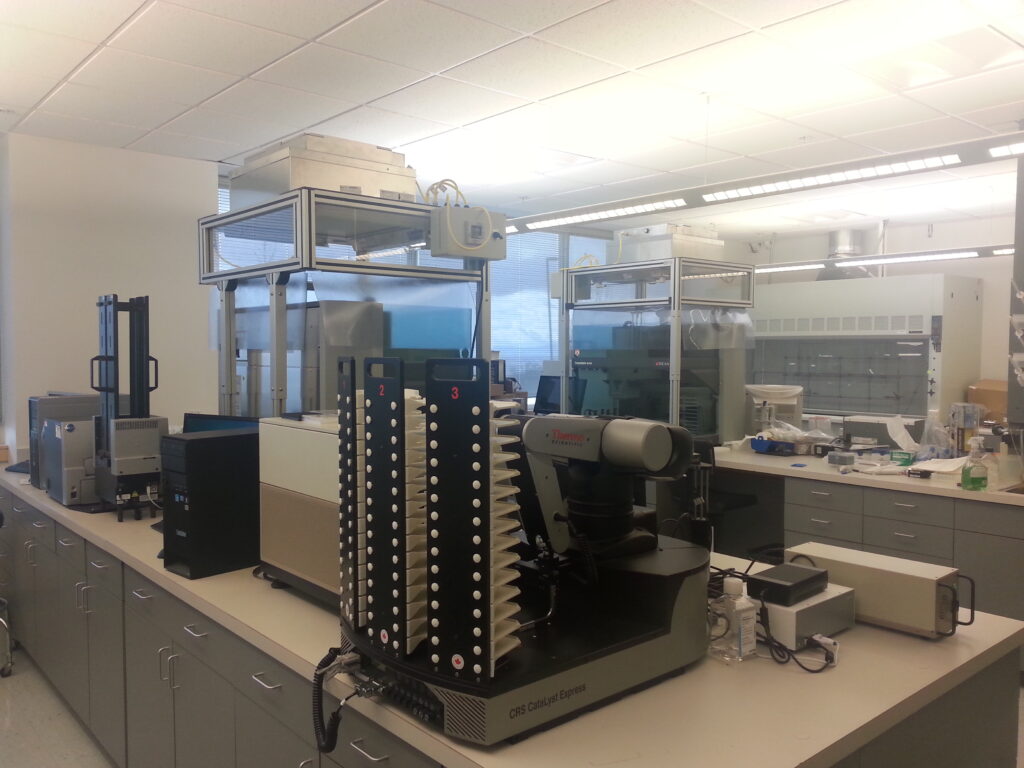
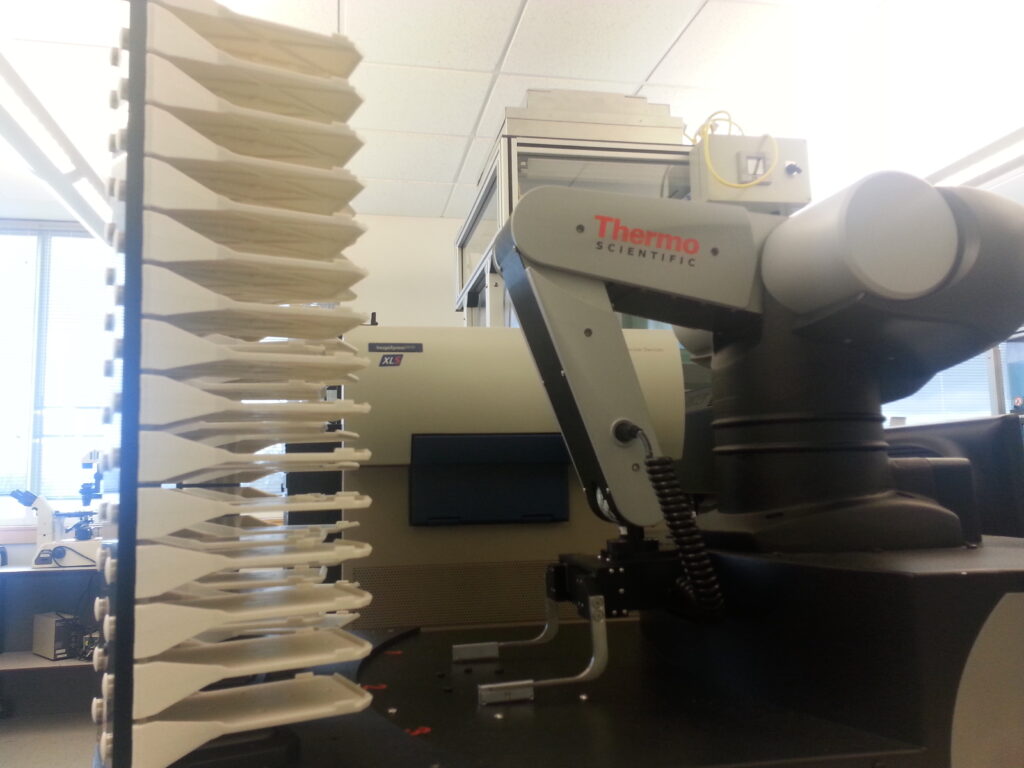
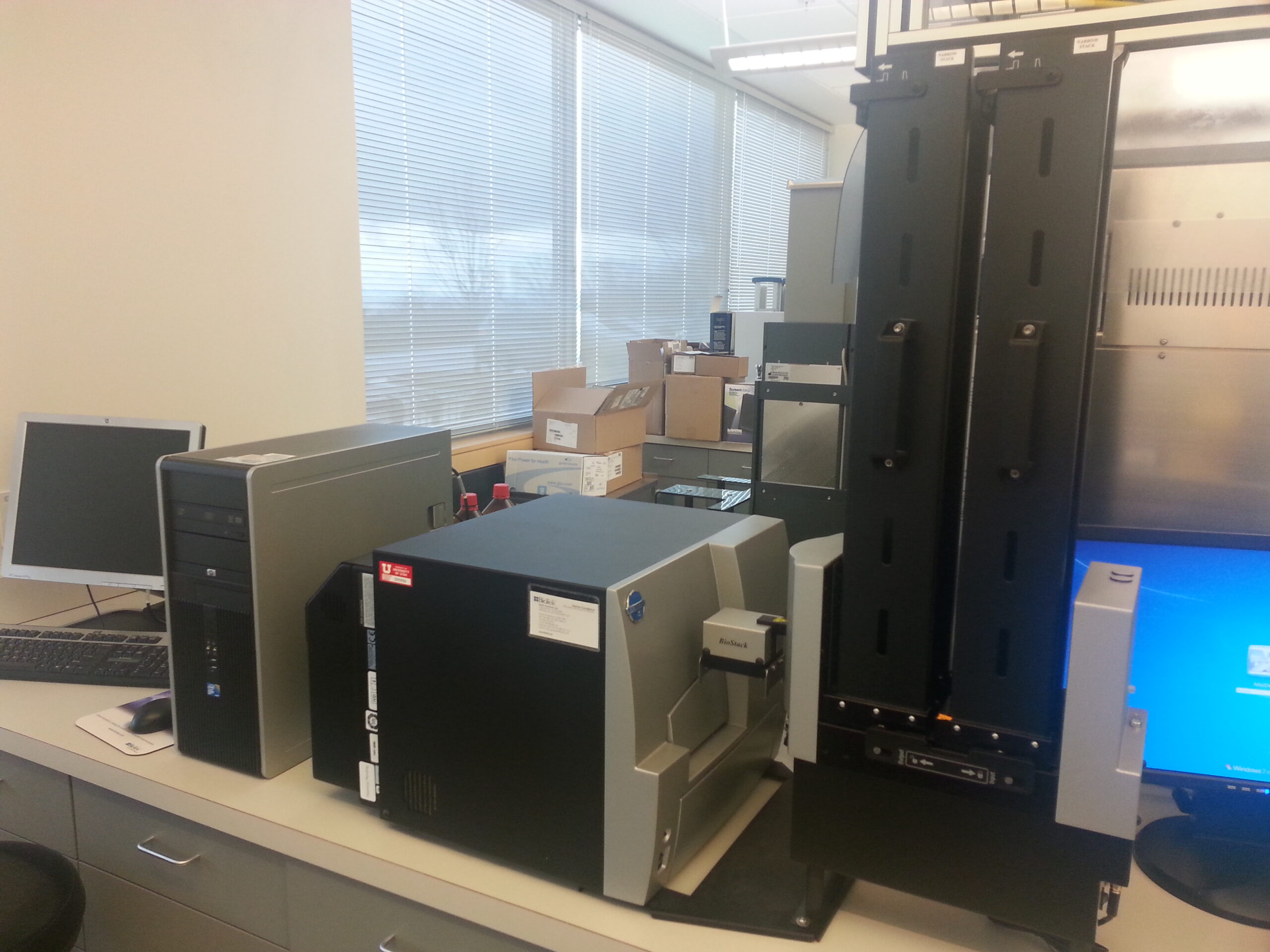
The mission of the Molecular Discovery & Screening Core is to empower University of Utah investigators with state-of-the-art technologies and expertise in high-throughput screening, functional genomics, cell engineering, and viral vector production, enabling discover and translational biomedical research.
Services
- High-throughput screening (HTS)
- Small molecule chemical libraries
- HTS assay development
- CRISPR-Cas9 libraries/screening
- Stable Cell Line Production
- Viral Packaging Services (lentivirus, adeno-associated virus)
- Consultation on target identification/validation, hit to lead optimization, PK/PD/Efficacy
- Other biomedical research related experiments
Commercial Compound Libraries Available for Screening
Private Chemical Collections*
- UUPCC –University of Utah Private Chemical Collection: A library of 120,000 compounds obtained from the former NPS Pharmaceutical Company. Many compounds in this library are unique and not commercially available, creating a valuable resource for the University. Due to the unique nature of this library, access will require a written proposal.
- Dept of Chemistry Library: A diverse collection (800 compounds) of molecular skeletons that represent the chemical interests of individual principal investigators. These compounds are all prepared by chemical synthesis within their laboratories and generally reflect natural product substructures or analogues of proven pharmacophores.
- Ireland Natural Product Collection: A set of natural products (240 compounds) isolated from marine invertebrate animals and micro-organisms. The collection reflects a wide array of natural product scaffolds and biosynthetic pathways. All compounds have been purified by HPLC and chemically characterized.
*These sets of molecules are proprietary and users will be asked to sign an intellectual property advisory notice
Service Rates
Requesting Services
Existing users may login directly to the Resource Scheduling System to schedule or order services. This system is cores-wide and uses University of Utah uNID authentication.
Recent Mentions
- Hicks, K. G., A. A. Cluntun, H. L. Schubert, S. R. Hackett, J. A. Berg, P. G. Leonard, M. A. Ajalla Aleixo, Y. Zhou, A. J. Bott, S. R. Salvatore, F. Chang, A. Blevins, P. Barta, S. Tilley, A. Leifer, A. Guzman, A. Arok, S. Fogarty, J. M. Winter, H. C. Ahn, K. N. Allen, S. Block, I. A. Cardoso, J. Ding, I. Dreveny, W. C. Gasper, Q. Ho, A. Matsuura, M. J. Palladino, S. Prajapati, P. Sun, K. Tittmann, D. R. Tolan, J. Unterlass, A. P.VanDemark, M. G. Vander Heiden, B. A. Webb, C. H. Yun, P. Zhao, B. Wang, F. J. Schopfer, C. P. Hill, M. C. Nonato, F. L. Muller, J. E. Cox and J. Rutter (2023). Protein-metabolite interactomics of carbohydrate metabolism reveal regulation of lactate dehydrogenase. Science 379(6636): 996-1003.10.1126/science.abm3452
- McCullough, B. S., H. Wang and A. M. Barrios (2022). Inhibitor Screen Identifies Covalent Inhibitors of the Protein Histidine Phosphatase PHPT1. ACS Med Chem Lett 13(7): 1198- 1201.10.1021/acsmedchemlett.2c00053
Citing Our Facility
Acknowledgments
We would like to thank you for acknowledging the our facility. This recognition allows us to highlight the impact of your work and demonstrates the important contributions of our facility makes to research across the University of Utah. The recognition our core receives from your acknowledgments also aids in receiving grants and further funding for equipment and services we can provide to our users.
Self-Run Services / Instrumentation Usage:
In published papers that used instruments at our facility and notably involved staff members please use the following format:
We acknowledge (facility name) at the University of Utah for use of equipment (insert instrument/service details here), and thank (insert any notable staff member – if desired) for their assistance.
Assisted Services:
In published papers where a staff member assisted you in addition to the requested services please use the following format:
We acknowledge (facility name) at the University of Utah for use of equipment (insert instrument/service details here), and thank (insert staff member-required) for their assistance in (service provided).
Collaboration:
For publications resulting from collaborations that assisted with the methodologies, planning process and execution of your experiment in addition to equipment usage we require Co-author attribution on your publication for our facility and any staff members who provided substantial contributions to the originating project.